Beam Load Calculator (Preliminary)
Estimate a preliminary elastic load limit for one idealised beam and load case. The result is the lower of a 0.6Fy bending-stress screen and a user-selected deflection-ratio screen; it is not a code design capacity.
Preliminary Beam Load Calculator
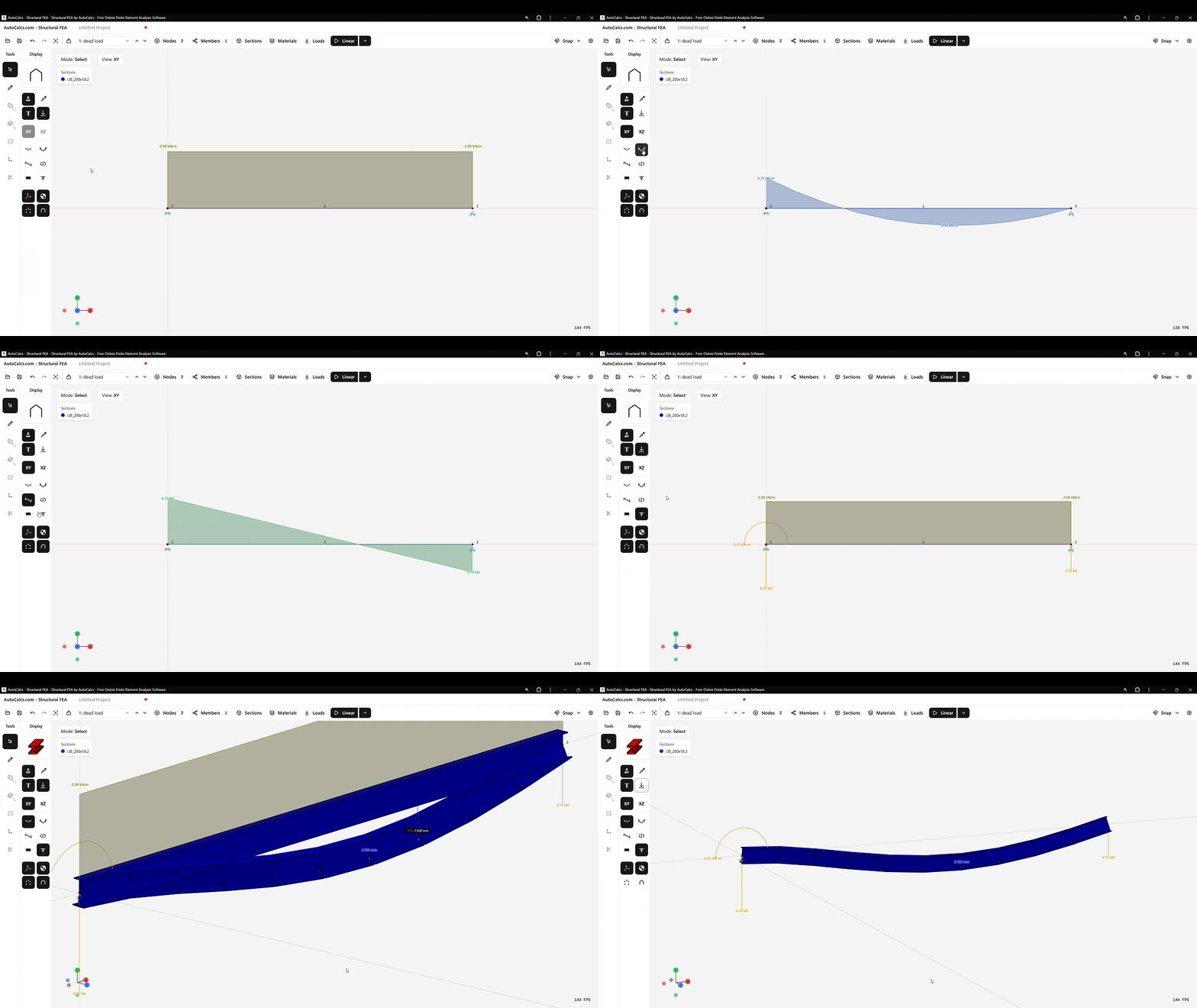
How the Screening Limit Is Calculated
This calculator evaluates two simplified criteria:
- Bending-stress screen - elastic section stress reaches 0.6Fy
- Deflection screen - elastic deflection reaches the selected span ratio
The reported load is the lower of those values. That identifies the controlling calculator screen only; it does not establish that the member, restraints, connections, or load combinations are adequate.
Bending-Stress Screen
The maximum bending stress in a beam is:
Where M is the idealised elastic bending moment and S is the elastic section modulus. This page uses Fb = 0.6Fy as a transparent yielding screen, then back-calculates the corresponding load. It is not a substitute for the flexural resistance provisions of any design code.
For a simply supported beam with UDL, Mmax = wL²/8, so the screened load is:
Deflection Screen
The maximum deflection is compared with the selected reference ratio (for example, L/360). The governing code, load component, and project criterion must be selected outside this calculator. Working backwards from the formula:
Rearranging for the corresponding screened load:
Input Values Explained
Section Modulus (S)
The elastic section modulus in mm³ or in³. For symmetric sections, S = I / (h/2) where h is the total depth. Look this up in section tables, or calculate it using our section properties calculator.
Yield Stress (Fy)
Enter the specified yield strength for the material and thickness being checked. Illustrative nominal values include:
- 250 MPa - one common metric structural-steel grade value
- 36 ksi - ASTM A36 minimum yield value for applicable shapes and thicknesses
- 50 ksi - a common US wide-flange nominal yield value
Verify the applicable product standard and thickness-dependent value. The calculator's 0.6Fy multiplier is only a simplified screen; ASD, LRFD, and other code methods require their own limit-state checks and factors.
Important Limitations
This Calculator Does Not Check:
- • Lateral-torsional buckling (unbraced length effects)
- • Local buckling, section slenderness, or plasticity
- • Shear capacity
- • Web crippling under concentrated loads
- • Connection adequacy
- • Load combinations and factors
Do not use the displayed value as an allowable load or safe working capacity. Complete the governing code checks using the actual restraints, load combinations, section classification, material, and connection details.
Related Calculators
Section Properties
Area, inertia, section modulus, and torsion constant
Moment of Inertia
Second moment of area for common shapes
Beam Deflection
Deflection formulas for various beam configurations
Unit Converter
Convert force, stress, mass, and more
Young's Modulus
Calculate E from stress-strain data
K-Factor (Effective Length)
Column effective length from alignment chart
Embodied Carbon
Estimate A1–A3 kgCO₂e from member masses and emission factors
Steel Weight
Estimate steel mass from unit mass, length, and quantity
Von Mises Stress
Equivalent von Mises stress from 3D or plane stress states
Principal Stress & Mohr's Circle
Principal stresses, max shear, and orientation from a 2D state
Plate Deflection & Stress
Flat plate bending stress and deflection under pressure